Source 4U Rackmountable GPU Superserver for AI, HPC, and Rendering
Compare 30 available units of the 4U Rackmountable GPU Superserver designed for department and enterprise applications. Buyers can evaluate models with Intel Xeon processors, varying storage capacities, and redundant power supplies to find the right solution for their infrastructure needs.
Key considerations
Products List


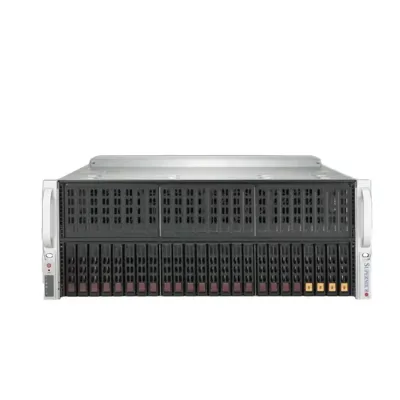


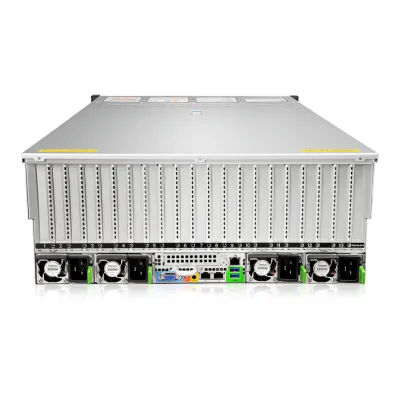
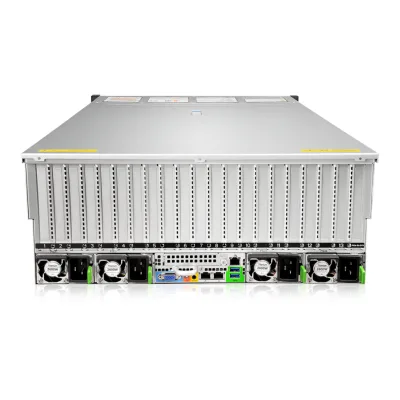
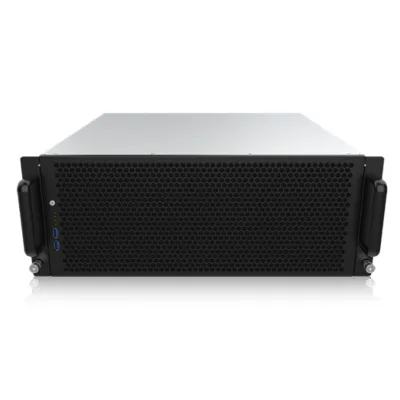


4u Rack Server 2-Node Intel 4CPU High-Density Fusionserver G5500 V5 Server Workstation
$13880.00 - $24880.00
MOQ: 1 Pieces

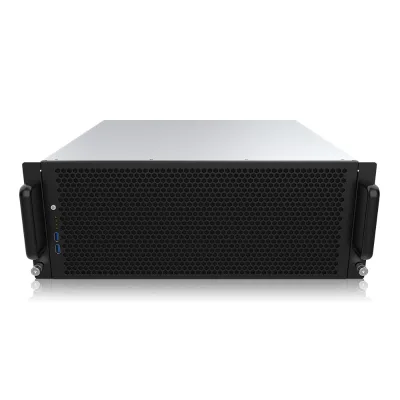


Quad-Socket Server 4u Rack Server with Triple 600GB Storage Drives Included
$5899.00 - $45999.00
MOQ: 1 Pieces

2u Dl380 Gen12 Rack Server Featuring GPU Support and Remote Management
$12999.00 - $99999.00
MOQ: 1 Pieces

Comprehensive Sourcing Guide
Strategic Sourcing Guide for 4U Rackmountable GPU Super Servers
Understanding the 4U Rackmountable GPU Super Server Market
The procurement of a 4U rackmountable GPU super server represents a critical investment for organizations requiring high-performance computing (HPC), artificial intelligence (AI) training, and large-scale data analytics. These systems are engineered to house multiple high-end graphics processing units (GPUs) alongside powerful central processing units (CPUs) to handle parallel processing workloads that standard servers cannot manage. The 4U form factor is particularly significant as it provides the necessary physical volume to accommodate extensive cooling solutions, large memory capacities, and multiple GPU cards, which are essential for maintaining thermal stability during intensive operations.
When evaluating the market, buyers must recognize that these systems are not monolithic products but highly configurable platforms. The supply chain for such specialized hardware often involves manufacturers who offer varying degrees of customization. Evidence from current market listings indicates that customization is frequently available, allowing enterprises to tailor the server architecture to specific workload requirements. This flexibility is a primary differentiator in the B2B procurement landscape, where off-the-shelf solutions may fail to meet the precise power, cooling, and connectivity needs of advanced computational tasks.
Technical Specifications and Architecture Analysis
A rigorous analysis of technical specifications is the cornerstone of successful procurement for this category. The system architecture typically revolves around the x86 platform, which remains the industry standard for general-purpose high-performance computing due to its broad software compatibility and ecosystem support. However, buyers must also be aware of the existence of non-x86 server architectures, which may be utilized for specialized applications or specific processor types. The instruction system for these servers is predominantly CISC (Complex Instruction Set Computer), aligning with the Intel Xeon processor family, which is a common observation in high-end server listings.
The processor configuration is a critical determinant of performance. Listings frequently reference the 4th Gen Intel Xeon Scalable processor, indicating a focus on the latest generation of high-core-count CPUs designed to maximize throughput. These processors often feature high main frequencies and support for advanced instruction sets that accelerate data processing. In terms of memory, the capacity requirements can vary significantly. While some configurations support up to 128GB of RAM, others may be optimized for lower capacities such as 16GB or 64GB, depending on the specific application tier. For GPU super servers, the supporting memory capacity is often a bottleneck, and buyers should verify that the system can scale to meet the demands of their specific datasets.
Storage architecture is equally vital. The observed market includes systems utilizing SSD storage for high-speed data access, as well as hybrid storage solutions that combine HDDs and SSDs to balance cost and performance. The storage capacity for these systems often exceeds 1TB, ensuring that large datasets can be cached locally for rapid retrieval. Network connectivity is another key specification, with observed configurations supporting 100GbE and 40GbE interfaces. These high-speed network capabilities are essential for distributed computing environments where data must be transferred between nodes with minimal latency.
Compliance, Certification, and Physical Standards
Compliance and certification checks are non-negotiable when sourcing industrial-grade server hardware. Buyers must verify that the physical dimensions of the server align with standard data center rack specifications. Observed standards in the market include specific box dimensions such as 58 × 44 × 25 cm for packaging, and larger chassis dimensions like 605 x 203 x 950mm for the unit itself. These measurements are critical for ensuring the server fits within standard 19-inch racks and that the facility's cooling infrastructure can accommodate the heat output of a 4U chassis.
While specific certification names are not universally standardized in all listings, the presence of a management interface is a key compliance indicator. Most modern servers include a Baseboard Management Controller (BMC) and support IPMI (Intelligent Platform Management Interface) protocols. These interfaces allow for remote monitoring, power management, and system diagnostics, which are essential for maintaining uptime in enterprise environments. Buyers should verify that the management interface supports the necessary security protocols and integration with existing data center management software.
Additionally, the origin of the product plays a role in compliance. Products originating from regions such as China or South Korea are common in the global supply chain. Buyers must ensure that the manufacturing process adheres to international quality standards and that the product meets the regulatory requirements of the destination country. The packaging standard, often listed as "Original" or "1," should be verified to ensure that the server arrives in a condition suitable for immediate deployment without additional protective measures.
Cost Drivers and Total Cost of Ownership
The cost of a 4U rackmountable GPU super server is driven by several factors, including the processor generation, memory capacity, storage type, and the number of GPUs supported. The observed price range in the market is vast, spanning from $1 to $330,000, reflecting the diversity of configurations from entry-level models to fully loaded enterprise systems. This wide range underscores the importance of defining precise requirements before engaging with suppliers to avoid overpaying for unnecessary capabilities or under-specifying for critical workloads.
Beyond the initial purchase price, the Total Cost of Ownership (TCO) must be considered. This includes the cost of power consumption, cooling requirements, and maintenance. Systems with redundant power supply units (PSU) are preferred for enterprise-level applications to ensure high availability, but they may come at a premium. The warranty period is another cost driver, with observed offerings ranging from 1 to 3 years. A longer warranty can reduce the financial risk associated with hardware failures, but it may also increase the upfront cost. Buyers should evaluate the trade-off between the initial investment and the long-term operational costs, including the potential for extended service contracts.
Typical Applications and Use Cases
The application of 4U rackmountable GPU super servers is diverse, ranging from department-level tasks to enterprise-level operations. At the department level, these servers may be used for localized data analysis, machine learning model training, or simulation workloads that require more power than a standard workstation can provide. For enterprise-level applications, the servers are often deployed in large-scale data centers to support cloud computing services, financial modeling, scientific research, and video rendering.
The specific use case dictates the required specifications. For instance, AI training workloads may prioritize high memory capacity and fast storage, while scientific simulations might require maximum CPU core counts and high-speed network connectivity. The ability to customize the server configuration allows buyers to optimize the hardware for their specific application. Whether the application involves rendering complex 3D graphics or processing massive datasets, the 4U form factor provides the necessary scalability and performance to meet these demands.
Supplier Evaluation and Quality Control
Evaluating suppliers for high-performance server hardware requires a multi-faceted approach. Buyers should assess the supplier's ability to provide customization, as this is a key attribute observed in the market. The availability of customization indicates a supplier's flexibility and technical capability to meet unique requirements. Additionally, the supplier's track record in delivering products with a "Stock" status is important for ensuring quick deployment. Lead times observed in the market, such as 3-5 working days, suggest a robust supply chain, but buyers should verify these figures for specific configurations.
Quality control is paramount in this sector. Buyers should request detailed test results and performance data to verify that the server meets the claimed specifications. The presence of a "Private Mold" status of "No" suggests that the server utilizes standard chassis designs, which can be a positive indicator of reliability and ease of maintenance. Furthermore, the inclusion of after-sales service is a critical factor in supplier evaluation. A supplier that offers comprehensive support, including hardware replacement and technical assistance, adds significant value to the procurement process.
Long-Term Procurement Considerations
Long-term procurement considerations for 4U rackmountable GPU super servers extend beyond the initial purchase. Buyers must plan for future scalability, ensuring that the server can be upgraded with additional memory, storage, or GPUs as workload demands increase. The system architecture should support these upgrades without requiring a complete system replacement. The warranty period, typically ranging from 1 to 3 years, should be aligned with the expected lifecycle of the hardware.
Maintenance and support are also critical long-term factors. The availability of spare parts and the supplier's ability to provide timely repairs are essential for minimizing downtime. Buyers should also consider the environmental impact of the server, including its energy efficiency and cooling requirements. As data centers face increasing pressure to reduce their carbon footprint, selecting energy-efficient servers with advanced power management features can contribute to sustainability goals. Finally, the integration of the server into the existing IT infrastructure should be seamless, with support for standard management protocols and compatibility with existing software ecosystems.
Comparative Analysis of Key Server Models
To assist buyers in making informed decisions, the following table compares key attributes of observed server models in the market. This comparison highlights the diversity in specifications and helps identify the most suitable options for different use cases.
| Model Number | Form Factor | Processor Type | RAM Capacity | Storage Type | Network Connectivity | Origin |
|---|---|---|---|---|---|---|
| AS 4124GS | 2U | Intel Xeon | >1TB (Storage) | SSD | 100GbE | China |
| SYS 220HE | 2U | Intel Xeon | 128GB | SSD | 100GbE | China |
| AS-1015SV | 2U | Intel Xeon | 16GB | Hybrid | 40GbE | China |
| SYS-421GE | 2U | Intel Xeon | 16GB | Hybrid | 40GbE | China |
| SYS 821GE | 2U | Intel Xeon | 16GB | Hybrid | 40GbE | China |
| sys420gu | 2U | Intel Xeon | 16GB | Hybrid | 40GbE | China |
| 7049GP-TRT | 2U | Intel Xeon | 64GB | SSD | 100GbE | South Korea |
| G8600 V7 | 2U | 4th Gen Intel Xeon | 128GB | SSD | 100GbE | China |
| SYS-421GU-TNXR | Rack | 4th Gen Intel Xeon | 128GB | SSD | 100GbE | China |
Note: The table reflects observed data points and does not imply that every listed product satisfies all attributes simultaneously. Buyers should verify specific configurations with suppliers.
In conclusion, sourcing a 4U rackmountable GPU super server requires a deep understanding of technical specifications, compliance standards, and long-term operational needs. By carefully evaluating suppliers, verifying quality control measures, and considering the total cost of ownership, buyers can secure a solution that meets their high-performance computing requirements while ensuring reliability and scalability for the future.
FAQs
What processor types are available for 4U Rackmountable GPU Superserver?
The available processors include Intel Xeon and 4th Gen Intel Xeon Scalable processors. These CISC instruction systems support high-performance computing workloads required for enterprise-level applications and AI training tasks.
Which storage capacities and types are supported in these servers?
Storage capacities exceed 1TB and include SSD or hybrid storage combining HDDs and SSDs. These configurations ensure fast data access and sufficient space for large datasets in department or enterprise environments.
Can I find 4U Rackmountable GPU Superserver models with 128GB RAM?
Yes, models with 128GB RAM capacity are available in the current listings. Some configurations also support 16GB or 64GB depending on the specific application tier and memory requirements of the workload.
What network connectivity options are offered for these servers?
Network connectivity options include 100GbE and 40GbE interfaces. These high-speed connections are essential for distributed computing environments requiring low latency and high throughput for data-intensive operations.
How long is the delivery time for 4U Rackmountable GPU Superserver?
The delivery time is typically 3-5 working days for stock items. This lead time applies to suppliers offering immediate availability, though customization may affect the final shipping schedule.
What warranty periods are provided for these server units?
Warranty periods range from 1 to 3 years depending on the supplier and model. Extended warranties like the 3-year option help mitigate risks for enterprise-level deployments requiring high availability.
Are customization options available for 4U Rackmountable GPU Superserver?
Customization is available for many models to meet specific workload requirements. Buyers can tailor architecture, memory, and storage configurations to optimize performance for department or enterprise-level applications.